

April 15, 2025

Comparing Special Needs Trusts and ABLE Accounts: A Comprehensive Guide
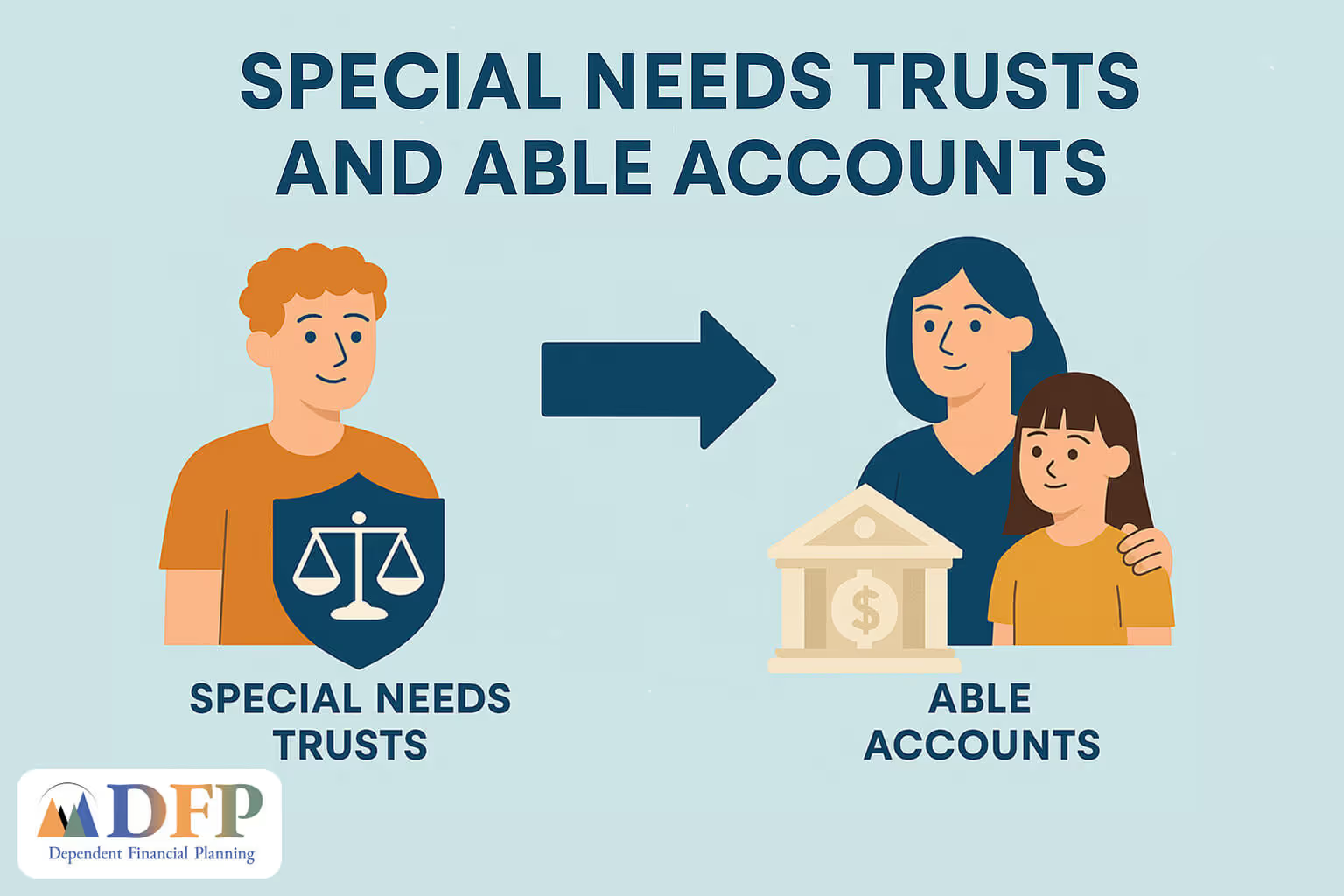
For individuals with disabilities and their families, financial planning is crucial to ensure long-term security without jeopardizing eligibility for essential public benefits like Medicaid and Supplemental Security Income (SSI). Two primary tools available are Special Needs Trusts (SNTs) and Achieving a Better Life Experience (ABLE) accounts. While both serve to protect assets and maintain benefit eligibility, they differ in structure, funding, and usage.
Understanding Special Needs Trusts (SNTs)
A Special Needs Trust is a legal arrangement designed to hold assets for a person with disabilities without affecting their eligibility for means-tested government programs. By placing funds in an SNT, the beneficiary can receive financial support for specific needs beyond what public benefits cover. If you're unsure which type of trust fits your family's situation, consider speaking with a Special Needs Certified Financial Planner® to explore your options.
Types of Special Needs Trusts
- First-Party SNTs: Funded with the beneficiary's own assets, such as an inheritance or personal injury settlement. These trusts must include a Medicaid payback provision, meaning any remaining funds upon the beneficiary's death may be used to reimburse Medicaid for services provided.
- Third-Party SNTs: Established by someone other than the beneficiary, typically a family member, using their own assets. These trusts do not require a Medicaid payback clause, allowing remaining funds to be distributed to other beneficiaries upon the primary beneficiary's death.
- Pooled Trusts: Managed by nonprofit organizations, these trusts pool resources from multiple beneficiaries for investment purposes while maintaining separate accounts for each individual. They can be a cost-effective option for those with smaller amounts to invesst.
Advantages of SNTs
- No Contribution Limits: Unlike ABLE accounts, there are no annual or lifetime contribution caps.
- Asset Protection: Funds in an SNT are not considered countable assets for Medicaid or SSI eligibility.
- Flexible Funding Sources: Family members and friends can contribute to the trust.
Considerations
- Establishment Costs: Setting up an SNT typically requires legal assistance, which can be costly.
- Complex Management: Trustees must adhere to strict guidelines to ensure distributions do not affect benefit eligibility.
- Limited Use of Funds: Disbursements are restricted to supplemental needs and cannot cover basic living expenses like food and housing.
Exploring ABLE Accounts
Established under the Achieving a Better Life Experience Act of 2014, ABLE accounts are tax-advantaged savings accounts for individuals with disabilities. They allow beneficiaries to save for disability-related expenses without compromising eligibility for public benefits. A Special Needs Certified Financial Planner® can help you understand how to strategically combine ABLE accounts with trusts to support your loved one’s long-term financial wellbeing.
Key Features
- Eligibility: Available to individuals whose disability onset occurred before age 26. This age limit is set to increase to 46 in 2026, expanding access to more individuals.
- Contribution Limits: Annual contributions are capped at $19,000 in 2025. Beneficiaries who are employed and do not participate in employer-sponsored retirement plans may contribute an additional amount up to the federal poverty level for a one-person household.
- Tax Benefits: Earnings grow tax-free, and withdrawals for Qualified Disability Expenses (QDEs) are tax-exempt.
- Account Management: Beneficiaries can manage their own accounts, promoting financial independence.
Qualified Disability Expenses (QDEs)
Funds from an ABLE account can be used for a broad range of expenses, including:
- Housing and utilities
- Education and training(
- Transportation
- Employment support
- Assistive technology
- Personal support services
- Health and wellness
- Financial and legal services
- Funeral and burial expenses
Considerations
- Account Cap: If the account balance exceeds $100,000, SSI benefits may be suspended until the balance falls below this threshold.
- Medicaid Payback: Upon the beneficiary's death, remaining funds may be used to reimburse Medicaid for services provided.
- Single Account Rule: Each beneficiary can have only one ABLE account.
Combining SNTs and ABLE Accounts for Optimal Planning
Utilizing both an SNT and an ABLE account can offer a comprehensive financial strategy:
- SNTs: Ideal for holding larger sums and covering expenses not permitted under ABLE accounts, such as legal fees or certain therapies.
- ABLE Accounts: Suitable for daily expenses and items that promote independence, with the added benefit of tax-free growth.
By coordinating distributions between the two, families can maximize benefits while ensuring compliance with program rules. To make the most informed decision, contact a Special Needs Certified Financial Planner® who can guide you through a personalized planning process tailored to your family’s goals.
Making the Right Choic
The decision between establishing an SNT, an ABLE account, or both depends on individual circumstances, including the beneficiary's age, the amount of assets, and specific financial goals. Consulting with a Special Needs Certified Financial Planner® can provide personalized guidance to develop an effective plan that safeguards benefits and enhances the quality of life for individuals with disabilities.
References: